What do the foundations of Islam tell us? Pillars of Islam.
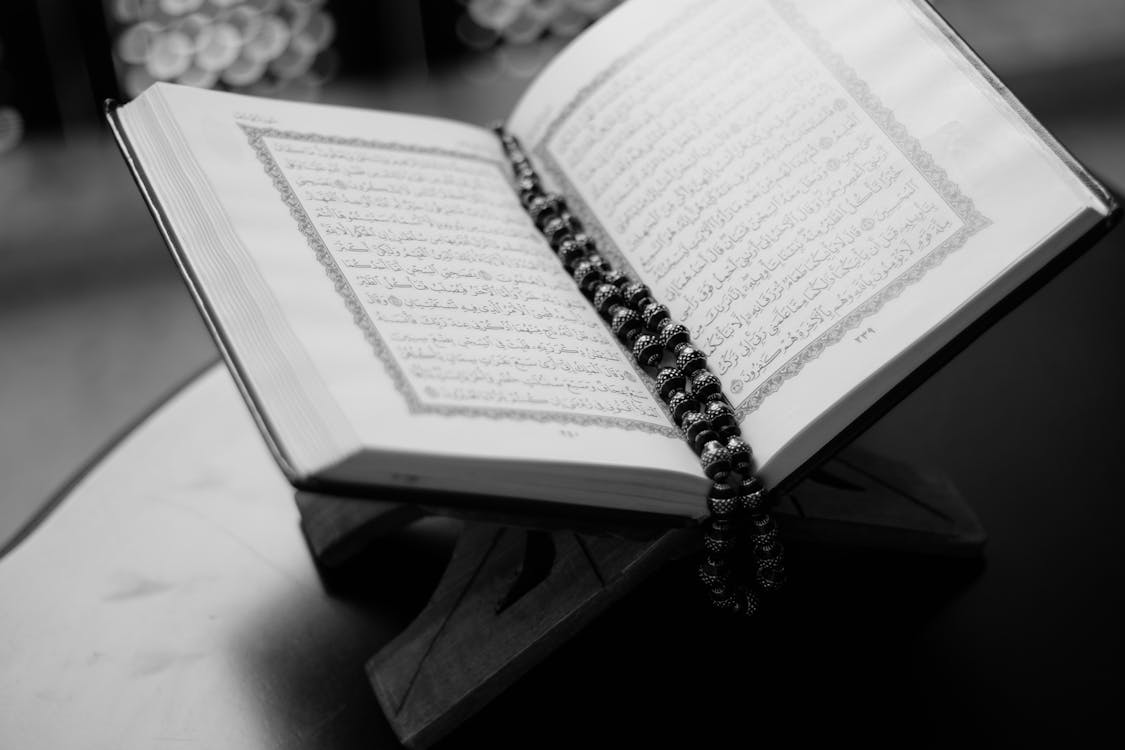
Grayscale Photo of Opened Qur'an
Pillars of
Islam
Islam is built on five pillars, as our master Muhammad - may God bless him and grant him peace - told about this from the hadith of Abdullah bin Omar bin al-Khattab, may God be pleased with him,
who said: I heard the Messenger of God - may God bless him and grant him peace -
say: “Islam is built on five: testimony that no
A god but God and that Muhammad is the Messenger of God, establishing prayer,
paying zakat, Hajj, and fasting Ramadan »[Bukhari included number (8) and
Muslim number: 19 - (16)].
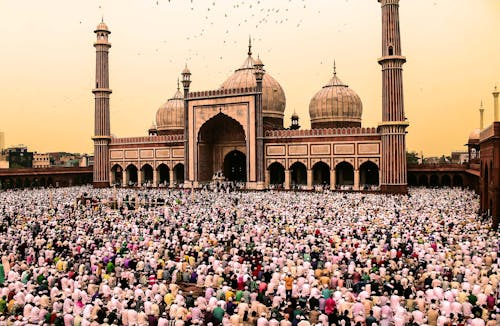
A crowd of People Gathering Near Jama Masjid
1. The two
testimonies
It is the key with which a person enters Islam. As for the first part of it, "There is no god but Allah",
it means that the Muslim utter his tongue and acknowledge at the same time in his heart that there is no god but Allah, and upon him the Muslim trusts and the testimony also requires
that a person believes that there is no creator of this universe except God alone without a partner to be worshiped with.
As for the testimony that Muhammad is the Messenger of God, it means that you believe that the Prophet Muhammad - may God bless him and grant him peace - is a messenger of mercy to the worlds,
a harbinger and a warning to all creation, and it also requires that a Muslim implement the teachings of the Prophet Muhammad - may God bless him and grant him peace - by doing what he was commanded and forsaking What is forbidden;
Allah, may He be glorified and exalted, said in
the Noble Qur’an: {And what the Messenger came to you, took it, and what it
forbade you from him, they ended.} [Al-Hashr, from the verse (7)].
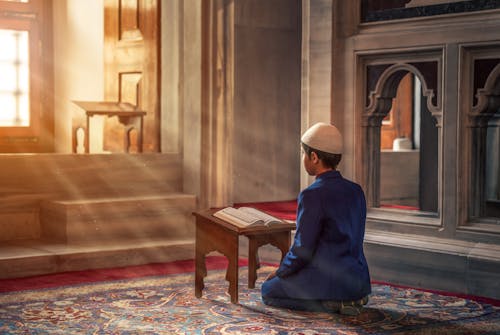
Photo of a Person Kneeling in Front of Book
2. The prayer
(Iqama the prayer)
Prayer is the link between the servant and his Lord, and it has a great position in Islam, and it is the first thing that a person will be held accountable for on the Day of Resurrection.
It is the pillar of religion, and the Muslim is required to perform five daily prayers, and others volunteer. And every Muslim must perform his prayer at the time specified for it,
and in the manner that our Master Muhammad, may God bless him and grant him peace, taught us
He says: “Pray as
you have seen me praying” (Al-Bukhari provided No. (605), on the authority of
Malik bin Al-Hawith).

Person Feeding Brown Deer with Carrot
3. Zakat
(giving Zakat)
Zakat is a financial worship imposed by God on the one who possesses the quorum - which is estimated at eighty-five grams of gold - purifying their souls from miserliness and their sheets of sins.
The Almighty said: {Take from their money a charity
that purifies them and purifies them with it} [Surat At-Tawbah, from verse
(103)].
The amount of it is two and a half percent for the one who acquires the nisaab and has spent on his money about a full moon.
Zakat is paid to the poor and needy, and this obligation is waived for those who do not have the nisaab.
Islam did not leave
the Muslim free to dispose of this deductible amount but rather defined it in
eight paths, one of which a Muslim could choose to spend zakat.
He says: {but
alms to the poor and the needy and the workers whose hearts and in the necks
and Debtors in the way of Allah and the son of the obligatory way of Allah, and
Allah is Knowing, Wise} [Surah Repentance, verse: (60)].

Close-Up Photo of Raisins and Dates
4. Fasting (fasting Ramadan)
As for fasting, it is fasting in the month of Ramadan, and Ramadan is a great season in which acts of worship abound.
Fasting during Ramadan has several virtues. God has ensured that those who fasted in faith and anticipation will forgive his sin.
Muslim fasts from food, drink, and marital cohabitation - for whoever is married - from dawn to sunset. And this obligation is waived for one who is unable to fast, such as illness or travel.
The Almighty said: {For
whoever among you is ill or on a trip for a few days from other days}
[Al-Baqarah, from the verse (184)].

People Gathering Near Kaaba, Mecca, Saudi Arabia
5. Hajj
(Pilgrimage to the home for whoever is able to travel)
Hajj in language: it is the intention to most,
and idiomatically: it is to visit the Sacred Mosque in Makkah Al-Mukarramah, to stand in Arafah, and to circumambulate the Holy Kaaba.
Hajj was imposed on every adult Muslim who possesses financial and physical ability. The Almighty said: {And to God, it is for the people to perform the pilgrimage to the home who is able to perform a path to it} [Surah Al Imran verse (97)].
God has imposed the Hajj as a purification for souls, and education for them on the meanings of slavery, obedience, and patience. The Prophet, peace, and blessings are upon him,
said: “Whoever performs this pilgrimage to this house and is not spoiled and not corrupted, he will return like the day his mother gave birth to him.”
[Narrated
by Al-Bukhari No. (1449), and Muslim No. 438- ( 1350), on the authority of Abu
Hurairah, may God be pleased with him).


Comments
Post a Comment